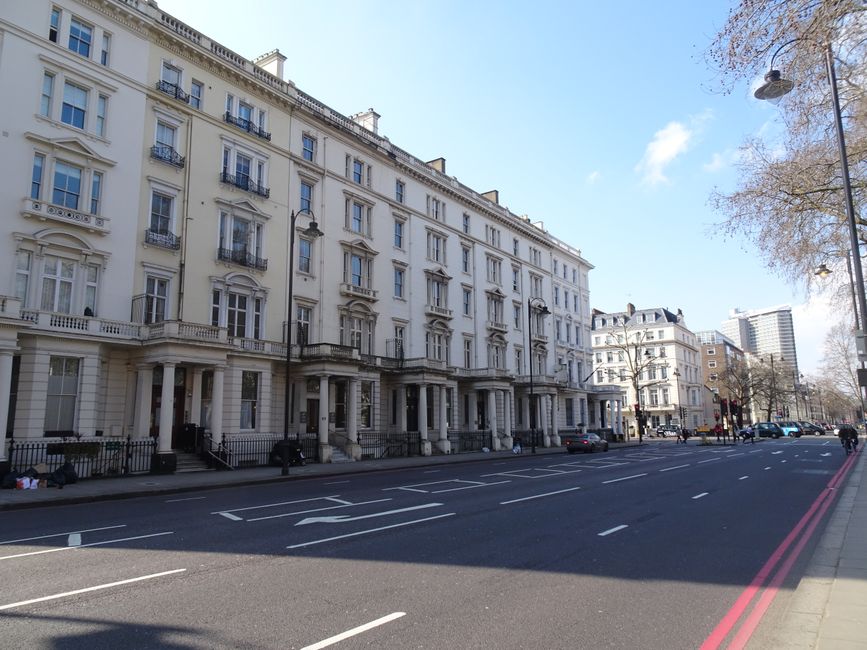
Removals pricing comparison Earls Court versus Kensington
If you are comparing removal costs in Earls Court and Kensington, you are probably trying to answer a very practical question: why does one move feel straightforward on paper, while the quote somehow climbs once the details are added? Truth be told, that is exactly where the difference often lies. Removals pricing comparison Earls Court versus Kensington is not just about distance. It is about access, parking, property type, loading time, building rules, packing needs, and the shape of the move itself.
These two neighbouring parts of West London can look similar from a map, yet the logistics can feel very different on the ground. A compact flat near Earls Court station is not the same job as a larger apartment, mews property, or family home in Kensington. One extra flight of stairs, a tighter street, or a loading restriction can change the price more than people expect. This guide breaks the comparison down clearly, so you can understand what you are paying for, what is negotiable, and where the hidden extras usually appear.
There is no fluff here. Just a plain-English breakdown of how removals pricing typically works in these areas, what to check before you book, and how to compare quotes without getting caught out. If you want a better sense of the wider service options as you read, it can also help to look at removals and pricing and quotes for the kind of support usually available locally.
Table of Contents
- Why the comparison matters
- How pricing works in Earls Court and Kensington
- Key benefits and practical advantages
- Who this is for and when it makes sense
- Step-by-step guidance
- Expert tips for better results
- Common mistakes to avoid
- Tools, resources and recommendations
- Law, compliance, standards, or best practice
- Options, methods, or comparison table
- Case study or real-world example
- Practical checklist
- Conclusion
- Frequently asked questions
Why Removals pricing comparison Earls Court versus Kensington Matters
A removals quote should reflect the actual work involved, not just a postcode. That sounds obvious, but in London it is easy to miss the small details that drive price. Earls Court and Kensington sit close together, yet they can produce very different moving conditions. A move from a fourth-floor mansion block with limited lift access is not priced the same way as a ground-floor flat with easy roadside loading. No surprises there, really.
Why does this matter so much? Because most moving costs come from time, labour, vehicle size, and risk. If the crew can park outside the property, load efficiently, and avoid delays, the job is smoother. If they have to carry furniture across a long communal corridor, wait for lift access, or work around a busy street, the cost rises. In areas like Kensington, where properties can be larger and access can be a bit more controlled, the overall move can sometimes be more expensive even over a short distance. In Earls Court, tighter streets and dense apartment living can create a different kind of challenge.
Put another way, the comparison is useful because it helps you separate location from logistics. That is the real game. Once you understand that, you are in a much stronger position to judge whether a quote is fair or padded.
It also helps you compare like with like. A cheap quote that excludes packing, disassembly, waiting time, or access problems is not really cheaper at all. It is just incomplete. And incomplete quotes have a nasty habit of becoming expensive on moving day. Let's face it, nobody wants that at 8:15 in the morning with boxes still in the hallway and the kettle already packed.
How Removals pricing comparison Earls Court versus Kensington Works
Most removal companies price jobs using a mix of factors rather than one fixed rate. The exact formula varies, but the logic is usually familiar:
- Volume of items - how much needs to be moved, often measured by room count, inventory, or van load size.
- Access difficulty - stairs, lifts, narrow hallways, parking distance, and building restrictions.
- Travel time - how long it takes to get between collection and delivery points.
- Labour required - number of movers, lifting complexity, and whether items need disassembly or reassembly.
- Time on site - how long loading and unloading is likely to take.
- Special items - pianos, fragile antiques, oversized furniture, or high-value pieces.
- Extra services - packing, boxes, wrapping, storage, or same-day support.
In practice, the Earls Court versus Kensington comparison often comes down to access and property type. Earls Court tends to include a lot of flats, studio apartments, and smaller homes, so a move may be more straightforward in volume but trickier in access. Kensington often involves larger homes, more furniture, more delicate items, and sometimes more formal building management arrangements. That can mean more time, more labour, and a higher quote.
A realistic quote should ideally come from a quick survey, a detailed inventory, or at least a careful phone assessment. If someone gives you a number without asking about stairs, parking, or whether your sofa even fits through the door, you should be a little wary. Not rude. Just wary.
For moves that need a more flexible vehicle and crew setup, some people compare man with van options with fuller house removals support. That choice alone can swing the final price quite a bit.
Key Benefits and Practical Advantages
Doing a proper pricing comparison is not just about saving money. It helps you make a cleaner decision under pressure, which is often half the battle on moving day. Here are the main advantages.
- Better budgeting: You can plan for realistic costs instead of hoping the cheapest quote will hold.
- Fewer surprises: When access issues are discussed in advance, there is less chance of add-ons later.
- More suitable service choice: You may discover that a smaller van, extra porter, or packing help is the smarter option.
- Lower stress: A transparent quote gives you room to focus on keys, paperwork, and timing.
- Improved packing decisions: If labour is expensive, you may decide to pack more yourself and save.
There is also a subtle but important benefit: comparison forces clarity. Once you have to list what is being moved, you often notice things you had mentally ignored. The bike in the hallway. The mirrored wardrobe. The storage cage full of "miscellaneous" items. We have all seen that one.
For people moving within or between these two neighbourhoods, the biggest advantage is knowing where the real cost driver sits. Is it the address? The time of day? The volume? The parking? Once you know that, you can decide whether to reduce the job size, shift the schedule, or ask for a more tailored quote.
Who This Is For and When It Makes Sense
This comparison is useful for a few different types of mover.
- Flat movers who want to understand why one quote is higher than expected.
- Home movers planning a local relocation between SW5 and nearby Kensington streets.
- Landlords and letting agents managing end-of-tenancy removals or furniture clearance.
- Students and young professionals trying to keep a move affordable without booking too little help.
- Families who need packing support, careful handling, and predictable timing.
- Businesses moving office stock, archives, or equipment locally.
It makes sense to compare pricing when you are:
- choosing between two postcodes for a local move,
- trying to work out whether a man-and-van service is enough,
- planning around limited building access,
- moving on a tight schedule, or
- trying to avoid paying for services you do not actually need.
If you are moving a smaller household and want a lighter-touch service, it may be worth reviewing flat removals or home moves before you request detailed pricing. That can help you match the service to the move, which sounds simple, but it saves a lot of time.
Step-by-Step Guidance
If you want a fair removals pricing comparison, do not start with the quote. Start with the move itself.
1. Build a simple inventory
Write down what is actually going. Not "bedroom furniture", but bed frame, mattress, chest of drawers, desk, chair, mirror, boxes, and anything awkward. This is the single easiest way to avoid underquoting. A remover can only price accurately if they understand the load. Sounds basic, but people skip it all the time.
2. Check access at both addresses
Note stairs, lifts, entry codes, porter restrictions, and how far the vehicle can park from the door. In Earls Court, street access and parking can be tight. In Kensington, building rules and larger properties can add time. The difference between a 5-metre carry and a 40-metre carry can be more meaningful than the postcode itself.
3. Decide what help you really need
Do you need just transport, or packing and unpacking too? Will the movers dismantle furniture? Do you want boxes supplied? If you only compare van hire against a full service, you are comparing apples and oranges. A good company should explain the service layers clearly.
4. Ask for the pricing basis
Is the quote hourly, fixed, or based on a survey? Hourly pricing can work well for simple local moves, while fixed pricing may feel safer for more complex jobs. Neither is automatically better. The best option depends on how predictable the move is.
5. Confirm what is included
Make sure the quote covers labour, travel, mileage, fuel, waiting time, wrapping materials, and any likely access issues. If packing materials are included, ask which ones and how many. This is one of those boring admin steps that saves a lot of pain later.
6. Compare the final job, not the headline price
A lower quote can become more expensive if it excludes the basics. A slightly higher quote that includes proper loading time, protection, and a sensible team size may actually be better value. In removals, value often hides in the small print.
7. Book with enough lead time
Last-minute jobs can cost more, especially if you need a particular day or time. If your move is near month-end, school holidays, or a Friday afternoon, you may find demand tight. Book early if you can. It helps.
Expert Tips for Better Results
Here are a few practical tips that make a real difference, especially in dense London neighbourhoods.
- Ask for a survey if the move is not tiny. A short visual assessment can prevent avoidable underpricing.
- Measure the awkward items. Sofas, wardrobes, fridge-freezers, and beds are often the items that trigger delays.
- Be honest about parking. If the van cannot park directly outside, say so. It matters more than people think.
- Pack by room and label clearly. This speeds up unloading and helps movers place items correctly.
- Use protected wrapping for fragile or high-value items. Kensington properties often contain more delicate furniture and decor, so proper wrapping can be worth every penny.
- Plan the move window. Early starts can reduce disruption and sometimes avoid traffic. Around London, that can feel like winning the lottery. Well, nearly.
One thing we see often: people ask for the cheapest price, then ask for extra help later because the job grew legs. If you already know the move may be larger than expected, say so upfront. It is much easier to adjust a quote than to rescue a half-planned move.
If you want better continuity between planning, packing, and transport, services like packing and boxes or packing and unpacking services can make the move smoother, especially for busy households.
Common Mistakes to Avoid
Most removals pricing mistakes are not dramatic. They are small assumptions that snowball. Here is what tends to go wrong.
- Only comparing the headline number. The cheapest quote may omit labour time, packing, or access charges.
- Underestimating belongings. A few extra boxes can change the van size needed.
- Ignoring access constraints. Narrow roads, controlled parking, and long carries all add time.
- Forgetting about disassembly. Wardrobes, beds, and office desks often need taking apart.
- Leaving packing too late. Last-minute packing almost always slows the move and increases stress.
- Assuming all local moves are the same. Earls Court and Kensington may be geographically close, but the workload can be quite different.
Another common mistake is not asking whether the company has experience with the sort of property you live in. A remover who regularly handles compact flats may not automatically be the best fit for a larger Kensington home, and vice versa. Experience matters because it changes how efficiently the crew works and how carefully they protect your things.
And yes, people still forget keys. It happens more than you would think. Tiny thing, big delay.
Tools, Resources and Recommendations
You do not need fancy software to compare removals pricing well. A simple, organised approach usually works best.
- Room-by-room inventory list: Helps you and the mover estimate accurately.
- Photo set of access points: Staircases, lifts, parking spots, and tight corners can be easier to assess in pictures than in words.
- Basic measurement notes: Door widths, sofa length, bed size, and wardrobe height can save a lot of guesswork.
- Calendar notes for moving day: Useful for school runs, building access windows, lift bookings, or parking plans.
- Budget range tracker: Keep the quote, likely extras, and final estimate in one place so you can compare properly.
On the service side, it can help to browse related pages for the type of move you are arranging. For example, man and van and moving truck pages are useful if you are trying to match vehicle size to the job. If you are moving something bulkier, furniture removals may be more relevant.
And if the move includes items you do not want to carry, store, or throw away immediately, storage can sometimes be the practical bridge between addresses. Not glamorous. Very useful.
Law, Compliance, Standards, or Best Practice
For a local removals comparison, the main compliance questions are less about complex regulation and more about safe, sensible practice. That said, there are a few important points to keep in mind.
- Insurance: Check that the provider explains how goods are covered and under what conditions. "Covered" can mean different things depending on the policy and the circumstances.
- Health and safety: Reputable movers should work in a way that reduces lifting risks, protects stairways and floors, and avoids unsafe manual handling.
- Parking and access permissions: In London, moving vehicles may need to work around parking rules, building management restrictions, or loading windows.
- Clear terms and conditions: You should understand what happens if the schedule changes, access is blocked, or items are not ready on time.
- Payment clarity: Know when payment is due, what methods are accepted, and whether deposits apply.
For peace of mind, it is sensible to review a company's insurance and safety, health and safety policy, and terms and conditions before confirming a booking. If you are sharing data or requesting a quote, their privacy policy and payment and security information matter too. Small details, but the sort that show whether a business is properly run.
Best practice is simple: be accurate, be upfront, and get the service scope in writing. That is true whether you are moving from a fourth-floor flat off Earls Court Road or a larger home closer to Kensington High Street.
Options, Methods, or Comparison Table
If you are comparing pricing, it helps to think in terms of service models rather than just postcode. The table below gives a practical overview of how the two areas often differ in moving setup.
| Factor | Earls Court | Kensington | What this can mean for price |
|---|---|---|---|
| Typical property type | Flats, apartments, compact homes | Larger flats, townhouses, period properties | Kensington may need more labour and vehicle capacity |
| Access | Busy streets, parking restrictions, shared entrances | Managed buildings, longer carries, formal access rules | Either area can become pricier if access slows loading |
| Move volume | Often smaller to medium jobs | Often medium to larger jobs | Larger volumes increase time and van size |
| Service need | Basic transport or man-and-van common | More frequent need for packing and protection | More services usually increase the quote |
| Quote structure | Often hourly for simpler jobs | Fixed or survey-based for more complex jobs | Fixed pricing can offer better certainty on complex moves |
There is no universal rule that Kensington is always more expensive than Earls Court. Not at all. A small flat in Kensington with easy access can be cheaper than a difficult Earls Court move with no parking and four flights of stairs. The postcode matters, but the move details matter more.
If you are deciding between a light, flexible service and a fuller team-based job, the best fit may depend on whether your priority is speed, care, or convenience. For smaller local jobs, man with van can be a sensible starting point. For larger home jobs, house removalists may be a better match.
Case Study or Real-World Example
Here is a realistic local scenario. A couple moving from a second-floor Earls Court flat to a one-bedroom Kensington apartment might assume the distance will keep costs low. It is only a short trip, after all. But the Earls Court property has no lift, limited roadside space, and a couple of heavier items: a bed frame, a sofa, a dining table, and around twenty boxes. The Kensington destination has a managed entrance with a timed loading slot and a lift, but the mover needs to book around the building rules.
On paper, that sounds simple. In practice, the move needs careful timing, a slightly larger team than expected, and extra protection for furniture corners and stair walls. The final quote could be higher than a purely distance-based estimate, even though the postcodes are close. That is the lesson. Removals pricing is rarely about miles alone.
Now imagine a different case: a small studio move within Earls Court, with easy parking and no bulky furniture. The job may be quicker, more straightforward, and cheaper, even if the customer initially thought Kensington would always cost more. Same city, very different day. That is why a real quote has to reflect the actual logistics, not just the address on the envelope.
If the move is urgent, or if the timeline has shifted suddenly, it can also be worth checking same-day removals or urgent move guidance if the exact situation applies. Last-minute arrangements are never ideal, but they can be handled sensibly with the right expectations.
Practical Checklist
Use this checklist before you accept a quote.
- Have I listed every room and major item?
- Have I checked stairs, lifts, and parking at both addresses?
- Have I explained any awkward furniture or fragile items?
- Do I know whether packing is included?
- Do I know whether disassembly and reassembly are included?
- Have I asked how waiting time is charged?
- Have I confirmed the quote type: hourly or fixed?
- Do I understand the insurance and safety coverage?
- Have I checked payment terms and cancellation conditions?
- Have I compared the full service, not just the headline price?
If you can tick most of those off, you are in a much stronger position. And if not, that is fine too. Better to find the gap now than on moving morning when the boxes are stacked to the ceiling and everyone is pretending not to panic.
Conclusion
The core idea behind Removals pricing comparison Earls Court versus Kensington is simple: proximity does not guarantee similar pricing. Access, property type, load size, and service scope matter just as much, if not more. Once you compare the real moving conditions rather than just the postcode, the quotes start to make sense. That is where you get control back.
If you are planning a move in either area, focus on clarity first. Get the inventory right, describe access honestly, and choose the service level that fits your actual situation. A smart comparison will usually save you money, time, or stress, and often all three. That is the good outcome, really.
Get a free quote today and see how much you can save.
Whether you are moving a single flat, a family home, or a more complex property, the best move is the one that feels calm, well-planned, and properly priced. A little preparation goes a very long way.
Frequently Asked Questions
Is removals pricing usually higher in Kensington than Earls Court?
Not always. Kensington can be more expensive when homes are larger, access is more controlled, or the job needs more labour. But a difficult Earls Court move with stairs, tight parking, or limited access can cost just as much, sometimes more. The quote depends on the full job, not the postcode alone.
What details do I need to give for an accurate removals quote?
You should give a room-by-room list, access details, floor level, lift availability, parking situation, and any awkward or heavy items. If you need packing or furniture disassembly, say so early. The more honest the brief, the better the quote tends to be.
Why do two local quotes vary so much?
Because one company may include more services, more labour, or more time on site. Another may quote low at first and add extras later. It is worth checking whether the price includes packing materials, waiting time, travel, and insurance coverage.
Should I choose an hourly or fixed removals price?
Hourly pricing can work well for smaller, predictable jobs. Fixed pricing can be better when the move is more complex and you want certainty. Neither is automatically better. It depends on how clear the job is before moving day.
Are man-and-van services cheaper than full removals?
Usually yes for smaller jobs, because you are paying for a lighter setup. But if the move is large, awkward, or time-sensitive, a fuller removals service may be better value because it gets the job done faster and more safely.
Do stairs really make that much difference to the price?
Yes, they often do. Stairs slow down loading and unloading and increase the physical effort required. The same applies to long carries from the van to the door. What looks like a small detail can change the whole pace of the move.
Can I reduce the removals cost by doing some of the work myself?
Yes. Packing some items yourself, dismantling simple furniture in advance, and making sure everything is ready can reduce labour time. Just be careful not to under-prepare, because delays on the day can wipe out the savings.
What should I ask before booking a removals company?
Ask what is included, whether the quote is fixed or hourly, how insurance works, whether the crew handles stairs and furniture disassembly, and how parking or waiting issues are charged. Clear answers now are much better than surprises later.
Is same-day removal possible in Earls Court or Kensington?
Sometimes, yes. It depends on availability, move size, and timing. Same-day arrangements are more likely to work for smaller jobs and urgent moves with flexible access. They can be useful, but they are rarely the cheapest option.
How can I spot a quote that is too cheap to be realistic?
If the quote is far below the others and there is very little discussion about your items, access, or timing, be cautious. A very low number can mean important services are missing, or that add-ons will appear later. A proper quote should feel specific, not vague.
Do I need packing services for a local move?
Not necessarily. Many local moves can be handled with self-packing if you have time and can pack well. But packing services can be helpful if you are short on time, moving fragile items, or trying to keep the day as smooth as possible.
What is the most common reason removals costs go up unexpectedly?
Usually it is access or undercounted items. A property with difficult parking, more stairs than expected, or more boxes than originally declared can quickly extend the job. Good planning and honest detail tend to prevent that.